Heels Down Co

Category: Equestrian

Horse riding, tack, barn essentials, grooming, equipment, and equestrian lifestyle.

  • 5 Mistakes that create tension in the saddle

    5 Mistakes that create tension in the saddle

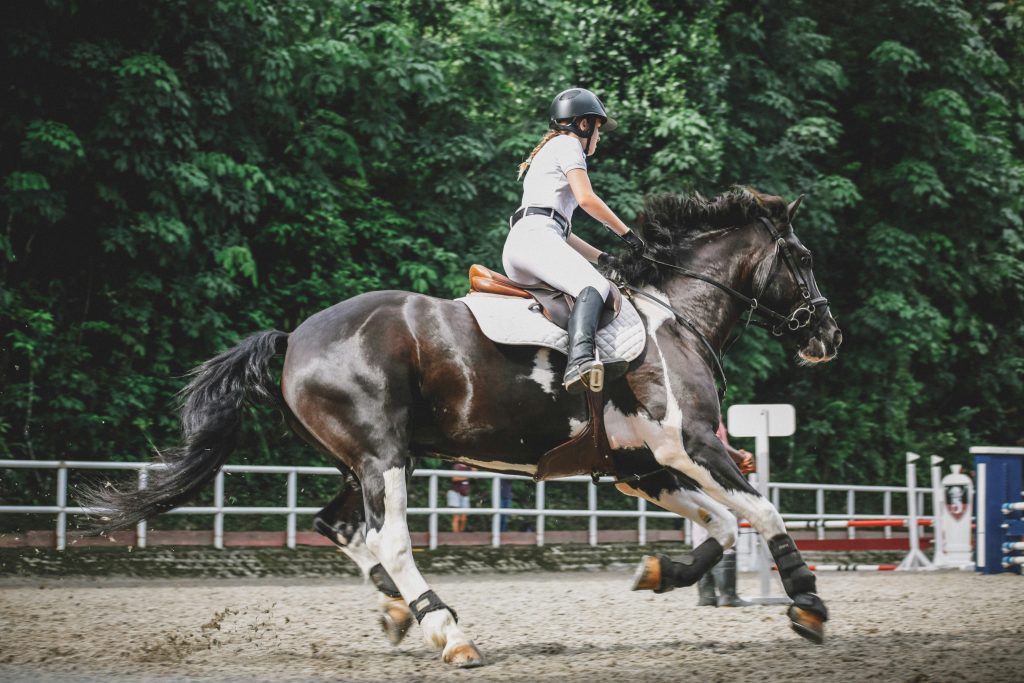
    Photo Credit: Brett Sayles

    How becoming a steadier rider can change the way you ride

    Sometimes a ride feels harder than it should.

    Your horse may feel tense. You may feel like you’re using too much rein, giving too many corrections, or constantly trying to fix something. You may finish the ride wondering why everything felt so difficult when you know you and your horse are capable of more.

    Before assuming your horse is the problem, take a moment to look at what’s happening in your own body and mind.

    Horses are incredibly aware of the people riding and handling them. Small changes in our breathing, posture, hands, balance, and intention can influence the way we communicate.

    That doesn’t mean every difficult ride is caused by the rider. Horses have their own personalities, physical needs, experiences, and bad days too.

    But becoming more aware of our own tension can give us another place to start.

    Here are five common mistakes that can create unnecessary tension in the saddle—and what you can do instead.


    1. Holding Your Breath

    It sounds simple, but many riders hold their breath without realizing they’re doing it.

    Maybe you’re approaching something that makes you nervous. Maybe you’re concentrating hard on getting an exercise right. Or perhaps your horse suddenly becomes tense and your instinct is to brace.

    Whatever the reason, holding your breath can cause the rest of your body to tighten.

    Your shoulders may rise. Your hands may become less flexible. Your seat can become less relaxed, and your entire body can start communicating tension rather than softness.

    Try this instead

    Make breathing part of your riding awareness.

    Before you begin an exercise or approach something that makes you nervous, take a deliberate breath and allow yourself to exhale.

    Pay attention to:

    • Your shoulders
    • Your jaw
    • Your hands
    • Your legs
    • Your seat

    Ask yourself:

    “Am I breathing?”

    Sometimes that one question is enough to bring your attention back to your body.

    You don’t need to force yourself to be perfectly relaxed. Instead, look for small opportunities to soften.


    2. Riding Ahead of the Moment

    Anticipation can create tension before anything has actually happened.

    You see the jump coming and start worrying about it.

    You expect your horse to spook.

    You know you’re approaching the part of the arena where things usually go wrong.

    Or you begin thinking three steps ahead instead of paying attention to the step you’re actually riding.

    When your mind gets ahead of the moment, your body can follow.

    You may shorten the reins, grip with your legs, lean forward or back, or begin making corrections before your horse has actually done anything wrong.

    Try this instead

    Stay present.

    Instead of thinking:

    “What’s going to happen?”

    Bring your attention back to:

    “What is happening right now?”

    Focus on the rhythm of the horse’s movement. Feel your position. Notice your breathing. Think about where you’re going and what you’re asking for in the current moment.

    You can prepare without becoming tense.

    Preparation gives you a plan.

    Anticipation often creates a problem before there is one.


    3. Overcorrecting

    When something doesn’t go the way we expected, it’s tempting to immediately do more.

    More rein.

    More leg.

    More pressure.

    Another correction.

    And then another.

    The problem is that more input doesn’t necessarily create a clearer message.

    Sometimes it creates confusion.

    Imagine someone giving you several different instructions at the same time. Even if every individual instruction makes sense, it can become difficult to figure out exactly what they’re asking you to do.

    The same principle applies to riding.

    Try this instead

    Give your horse a clear request and then allow time for a response.

    If the response isn’t what you wanted, assess what happened before immediately adding more pressure.

    Ask yourself:

    • Did I give a clear cue?
    • Did I give my horse enough time to respond?
    • Was my position supporting what I was asking?
    • Did I accidentally give conflicting signals?
    • Do I actually need another correction?

    Sometimes the best correction is less.

    Clear communication isn’t about constantly doing something. It’s about making your requests understandable.


    4. Tight Hands

    Your hands have a direct role in how you communicate with your horse, which makes them an easy place for tension to show up.

    When you’re nervous or frustrated, it can be tempting to hold tighter.

    You may shorten the reins because you want more control.

    You may tighten your fingers when your horse speeds up.

    You may not even realize how much tension you’re carrying through your arms.

    But tension in your hands can travel through your arms and shoulders and affect the rest of your position.

    Try this instead

    Become aware of what your hands are doing.

    Ask yourself:

    “Am I holding the reins, or am I gripping them?”

    Your goal isn’t to have completely passive hands. Good riding requires communication.

    Instead, think about maintaining a consistent, intentional connection without unnecessarily tightening.

    Keep checking your:

    • Fingers
    • Wrists
    • Forearms
    • Elbows
    • Shoulders

    If you notice yourself getting tense, take a breath and consciously soften where you can.

    The goal isn’t to throw away the reins.

    It’s to communicate without unnecessary tension.


    5. Riding Without Intention

    One of the easiest ways to become reactive is to get on your horse without knowing what you want from the ride.

    That doesn’t mean every ride needs to have a complicated training plan.

    Sometimes the goal really is just to enjoy your horse.

    But having some intention can help you stay focused rather than reacting to whatever happens next.

    Without direction, you may spend the ride responding to problems as they appear.

    Your horse speeds up—you react.

    Your horse drifts—you react.

    You lose your position—you react.

    Something doesn’t go perfectly—you react.

    Try this instead

    Before you ride, choose one simple intention.

    It could be:

    • Keep my breathing steady.
    • Focus on my position.
    • Ride with softer hands.
    • Stay present.
    • Improve my transitions.
    • Be patient.
    • Ride forward with confidence.
    • Enjoy my horse.

    It doesn’t have to be complicated.

    In fact, one clear intention is often enough.

    Having something specific to focus on gives your mind somewhere productive to go.


    What If You’re Already Tense?

    Recognizing tension doesn’t mean you have to fix everything in one ride.

    Sometimes the best thing you can do is simply notice it.

    You might realize:

    “My shoulders are tight.”

    Or:

    “I’ve been holding my breath.”

    Or:

    “I’ve been anticipating everything my horse does.”

    That awareness is progress.

    You can then make one small adjustment.

    Take a breath.

    Relax your shoulders.

    Soften your hands.

    Sit deeper.

    Look where you’re going.

    Give your horse a moment to respond.

    Then continue.

    You don’t need to make every ride perfect.


    The Rider-Horse Connection

    Riding is a conversation between horse and rider.

    Your horse communicates through movement, body language, expression, rhythm, and behavior. You communicate through your position, aids, balance, energy, and intention.

    The better you become at noticing your own communication, the easier it can become to recognize what you’re communicating to your horse.

    That doesn’t mean you should blame yourself whenever a ride doesn’t go well.

    It means you have something you can work on.

    And that’s one of the best parts of riding.

    There is always something to learn.


    A Simple Reset Before Your Next Ride

    Before you mount, take a moment.

    Don’t rush straight into the ride.

    Stand beside your horse and take a breath.

    Then ask yourself:

    How does my body feel?

    Are your shoulders tense?

    Is your jaw tight?

    Are you holding your breath?

    Are your hands already gripping?

    Then ask:

    What is one thing I want to focus on today?

    Choose one thing.

    That’s enough.

    Once you’re riding, return to that intention whenever you notice yourself becoming tense or distracted.

    You don’t have to fix everything.

    Just come back to the present moment.


    Final Thought

    A steady rider isn’t necessarily a rider who never gets nervous, makes mistakes, or has a difficult ride.

    A steady rider is someone who can notice what’s happening and make a thoughtful choice about what to do next.

    Sometimes that means asking for something differently.

    Sometimes it means giving your horse more time.

    Sometimes it means correcting your own position.

    And sometimes it means taking a breath and starting again.

    Calm doesn’t mean passive.

    It means intentional.

    The next time a ride feels tense, before immediately asking, “What’s wrong with my horse?”, take a moment to ask:

    “What am I bringing into this ride?”

    That simple question might give you a different place to begin.

    Heels Down. Mind Calm. Ride Steady.


    Keep Exploring Heels Down Co.

    Looking for more ways to become a more thoughtful, confident rider?

    Explore the Journal for practical riding advice, horse care information, gear guides, and inspiration for life in and around the barn.
  • 10 Horse Riding Mistakes Beginners Make (And How to Avoid Them)

    10 Horse Riding Mistakes Beginners Make (And How to Avoid Them)

    Photo credit: Igor Photography 

    Learning to ride a horse is an exciting journey filled with unforgettable moments, new challenges, and plenty of lessons along the way. Whether you dream of riding English, Western, hitting the trails, or simply enjoying time around horses, every experienced rider started exactly where you are now—a beginner.

    The truth is, mistakes are part of learning. In fact, every confident rider has made them. The important thing is recognizing those mistakes, learning from them, and continuing to improve.

    If you’re just starting your riding journey, here are ten common beginner mistakes and practical ways to avoid them.


    1. Skipping Safety Gear

    No matter how experienced—or inexperienced—you are, safety should always come first.

    One of the biggest mistakes beginners make is riding without the proper equipment, especially a certified riding helmet. Riding boots with a defined heel are equally important because they help prevent your foot from slipping through the stirrup.

    Before every ride, make sure you have:

    • A properly fitted riding helmet
    • Riding boots with a heel
    • Comfortable riding clothes
    • Gloves (optional but recommended)

    A few minutes spent preparing can make a big difference.

    ✅ Quick Fix:
    Before mounting your horse, do a quick safety check. Make sure your helmet is securely fastened, your boots have a defined heel, and your tack has been inspected. Making this a habit takes less than a minute and can significantly improve your safety.


    2. Looking Down Instead of Ahead

    It’s natural to look at your horse while you’re learning, but constantly looking down throws off your balance and posture.

    Instead, focus on where you want to go. Looking ahead helps improve your position, balance, and communication with your horse.

    A simple trick is to pick a point in the distance and ride toward it.

    ✅ Quick Fix:
    Choose an object at the far end of the arena or trail and keep your eyes focused on it. Looking where you want to go naturally improves your balance, posture, and steering.


    3. Holding the Reins Too Tightly

    Many beginners grip the reins tightly because they’re nervous.

    Unfortunately, this can make communication confusing for your horse and create tension in both your hands and your horse’s mouth.

    Think of holding the reins like holding someone’s hand—firm enough to maintain contact, but never so tight that it becomes uncomfortable.

    Relaxed hands help create a relaxed horse.

    ✅ Quick Fix:
    Every few minutes, wiggle your fingers and take a deep breath. This simple exercise reminds you to soften your grip and encourages your horse to relax as well.


    4. Forgetting to Breathe

    It sounds simple, but many new riders hold their breath without realizing it.

    When you become tense, your horse often notices.

    Take slow, deep breaths throughout your ride. Relaxing your body helps your horse stay calmer too.

    ✅ Quick Fix:
    Whenever you notice yourself becoming tense, inhale slowly for four seconds and exhale for four seconds. Relaxing your breathing often relaxes your entire body—and your horse can feel the difference.


    5. Trying to Control the Horse with Only Your Hands

    Good riding comes from using your entire body—not just your hands.

    Your seat, legs, posture, balance, and voice all communicate with your horse.

    Learning to ride from your seat rather than pulling on the reins creates clearer communication and a smoother ride.

    ✅ Quick Fix:
    Before asking your horse to turn or stop, think “legs first, seat second, hands last.” Using your whole body creates clearer communication than relying on the reins alone.


    6. Ignoring Basic Horse Care

    Riding is only one part of horsemanship.

    Learning to groom your horse, clean hooves, check tack, and recognize small injuries is just as important as learning to ride.

    Spending time caring for your horse strengthens your partnership and teaches valuable skills every rider should have.

    ✅ Quick Fix:
    Spend five extra minutes grooming your horse before every ride. Check each hoof, run your hands over your horse’s legs, and look for cuts, swelling, or anything unusual before you saddle up.


    7. Comparing Yourself to Other Riders

    Every rider learns at a different pace.

    Some people feel comfortable after a few lessons, while others need more time to build confidence.

    Instead of comparing yourself to others, compare yourself to where you were last month.

    Celebrate small improvements—they’re what lead to big progress.

    ✅ Quick Fix:
    Keep a small riding journal after each lesson. Write down one thing you learned and one thing you improved. Comparing yourself to your previous rides is far more rewarding than comparing yourself to someone else.


    8. Wearing the Wrong Clothing

    Comfort and safety matter.

    Avoid:

    • Running shoes
    • Sandals
    • Shorts
    • Loose scarves
    • Clothing that restricts movement

    Instead, wear:

    • Riding boots
    • Long pants or riding breeches
    • Comfortable fitted clothing
    • A certified riding helmet

    The right clothing allows you to focus on riding instead of constantly adjusting your outfit.

    ✅ Quick Fix:
    Before heading to the barn, ask yourself three questions:

    • Am I wearing boots with a heel?
    • Am I wearing long pants?
    • Am I wearing a certified riding helmet?

    If the answer is yes to all three, you’re off to a great start.


    9. Being Afraid to Ask Questions

    Every instructor expects beginners to ask questions.

    If you’re unsure about something—ask.

    Whether it’s how to hold the reins, tack up a horse, or improve your position, asking questions shows that you’re eager to learn.

    There are no silly questions when it comes to your safety or your horse’s well-being.

    ✅ Quick Fix:
    Challenge yourself to ask your instructor at least one question during every lesson. Even a simple question can help you understand your horse better and improve your confidence.


    Photo credit: Stefanie Poepken

    10. Expecting Perfection Too Soon

    Perhaps the biggest mistake of all is expecting yourself to master riding immediately.

    Horseback riding is a lifelong learning experience.

    Even professional riders continue taking lessons, improving their skills, and learning from every horse they ride.

    Be patient with yourself.

    Confidence doesn’t come from never making mistakes—it comes from continuing to learn despite them.

    ✅ Quick Fix:
    Set one small goal for each ride instead of trying to master everything at once. Whether it’s maintaining a steady posting trot, keeping your heels down, or making smoother turns, celebrating small victories builds confidence over time.


    Bonus Tips for New Riders

    If you’re just getting started, remember these simple habits:

    • Arrive early for your lesson.
    • Listen carefully to your instructor.
    • Spend time with horses outside of riding.
    • Practice good posture.
    • Stay relaxed and enjoy the experience.
    • Always thank your horse after every ride.

    The relationship you build with your horse is just as important as the riding skills you develop.


    Frequently Asked Questions

    Is it normal to feel nervous during my first riding lesson?

    Absolutely.

    Most riders feel nervous when they begin. Confidence grows with experience, practice, and a good instructor.


    How often should beginners ride?

    Consistency is more important than intensity.

    Even one lesson each week can lead to steady improvement when combined with patience and practice.


    Should I learn English or Western riding first?

    Neither discipline is “better” for beginners.

    Choose the style that interests you most, or try both before deciding. The fundamentals of balance, communication, and horsemanship are valuable in every discipline.


    Will I make mistakes?

    Without a doubt—and that’s okay.

    Every experienced rider has made the same beginner mistakes at some point.

    The goal isn’t to avoid every mistake; it’s to learn from them.


    Final Thoughts

    Every rider’s journey begins with uncertainty, curiosity, and a willingness to learn.

    The mistakes on this list aren’t signs that you’re failing—they’re opportunities to become a better horseman or horsewoman.

    Focus on building good habits, asking questions, practicing regularly, and enjoying the process.

    Whether your passion lies in English riding, Western riding, trail riding, or simply spending time around horses, remember that every ride teaches you something new.

    At Heels Down Co, we believe the best riders never stop learning. Stay patient, stay safe, and enjoy every step of the journey.

    Happy riding!

  • Which Horse Riding Discipline Is Right for You? A Beginner’s Guide

    Which Horse Riding Discipline Is Right for You? A Beginner’s Guide

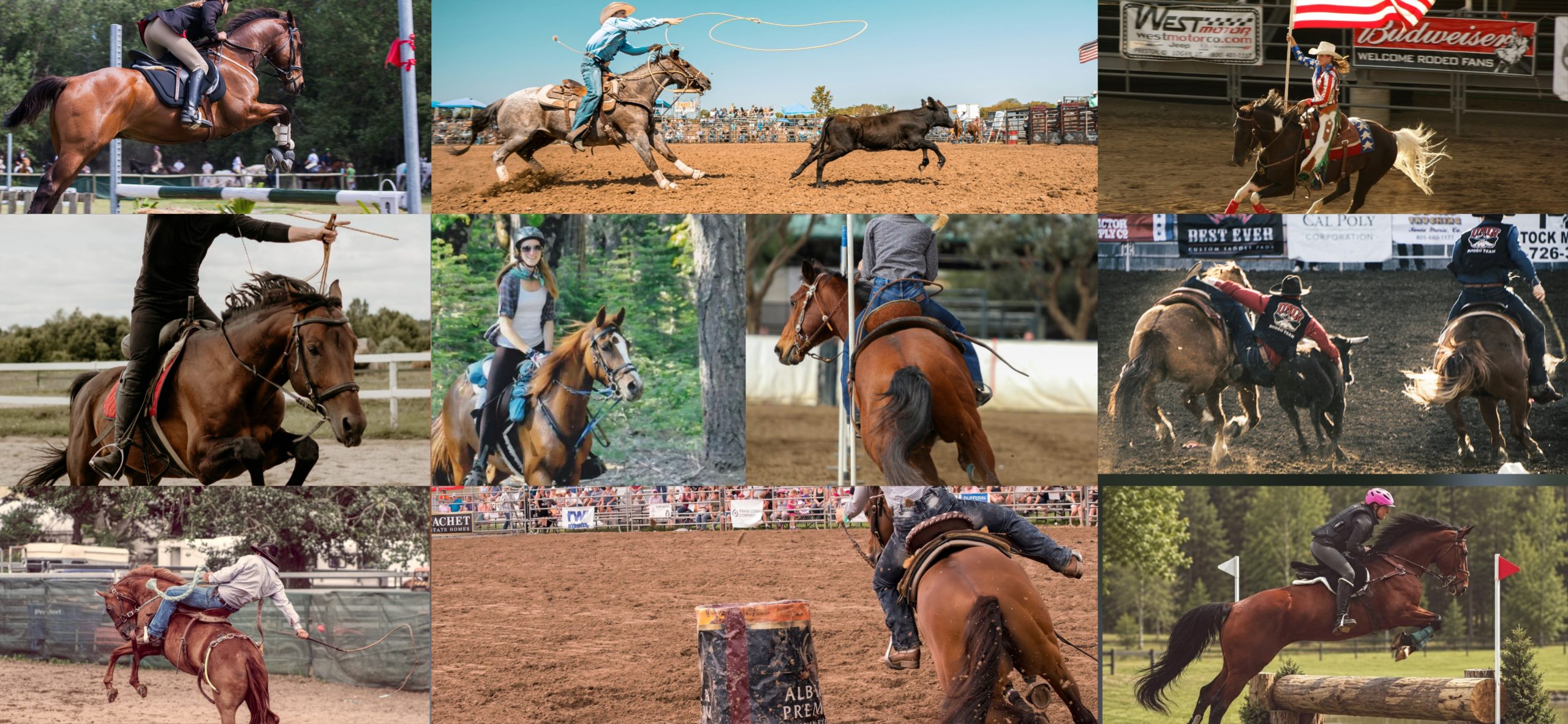
    Photo credits: Caitlin Ralston, Xavier McLaren, Christine Benton, Jean van der Meulen, Ted McDonnell, Tima Miroshnichenko, @coldbeer, Mark Thomas, Jordan Heinrichs

    If you’re new to horseback riding, one of the biggest questions you’ll face is, “Which riding discipline should I choose?”

    With so many options—English, Western, trail riding, dressage, jumping, barrel racing, ranch riding, and more—it can feel overwhelming to know where to begin.

    The good news is that there isn’t one “best” discipline for beginners. The right choice depends on your interests, goals, personality, and the type of riding experience you’re hoping to have.

    This guide will help you explore some of the most popular horse riding disciplines so you can find the one that fits you best.


    Start With Your Interests

    Before buying equipment or signing up for lessons, ask yourself a simple question:

    What excites you most about horseback riding?

    Do you picture yourself:

    • Riding scenic mountain trails?
    • Jumping over fences?
    • Competing at horse shows?
    • Working cattle on a ranch?
    • Racing around barrels?
    • Building a partnership with your horse and enjoying peaceful rides?

    There are no wrong answers. Your interests are one of the best indicators of which discipline you’ll enjoy most.


    Photo credit: Lily Banse

    English Riding

    English riding focuses on balance, precision, and communication between horse and rider.

    Popular English disciplines include:

    • Dressage
    • Hunter
    • Jumper
    • Eventing
    • Hunt Seat
    • Saddle Seat

    English Riding Might Be Right for You If…

    • You enjoy learning technical skills.
    • You like precision and attention to detail.
    • You dream of jumping or competing.
    • You enjoy structured lessons and continuous improvement.

    💡 Beginner Tip: Many riders begin with basic English lessons before deciding whether to specialize in jumping, dressage, or another discipline.


    Photo credit: Howard R Wheeler

    Western Riding

    Western riding developed from practical ranch work and emphasizes comfort, versatility, and smooth communication.

    Popular Western disciplines include:

    • Trail Riding
    • Ranch Riding
    • Reining
    • Barrel Racing
    • Western Pleasure
    • Cutting
    • Team Penning

    Western Riding Might Be Right for You If…

    • You enjoy relaxed riding.
    • You love spending hours on the trail.
    • You appreciate ranch traditions.
    • You’re interested in speed events or cattle work.

    💡 Beginner Tip: Western riding isn’t only for ranches. Many riders enjoy Western simply because they find it comfortable and versatile.


    Trail Riding

    If your dream is exploring forests, mountains, or open countryside, trail riding may be exactly what you’re looking for.

    Trail riders often enjoy both English and Western disciplines depending on the terrain and personal preference.

    Trail riding is perfect if you enjoy:

    • Nature
    • Adventure
    • Relaxation
    • Exploring new places

    Photo credit: Alexandra Tziolis

    Dressage

    Often called the “art of riding,” dressage focuses on harmony, balance, and precision.

    It develops excellent riding fundamentals that benefit riders in nearly every discipline.

    Dressage may be a great fit if you enjoy:

    • Attention to detail
    • Continuous learning
    • Building an incredible partnership with your horse

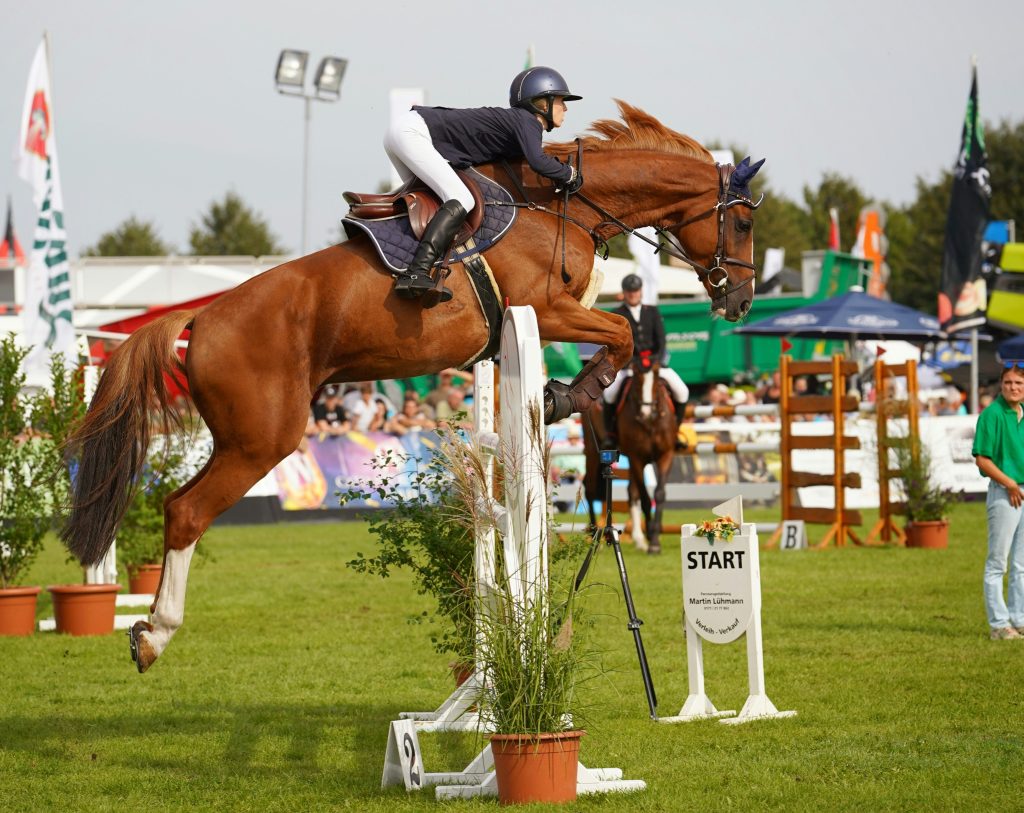
    Photo credit: Daniel Schuh 

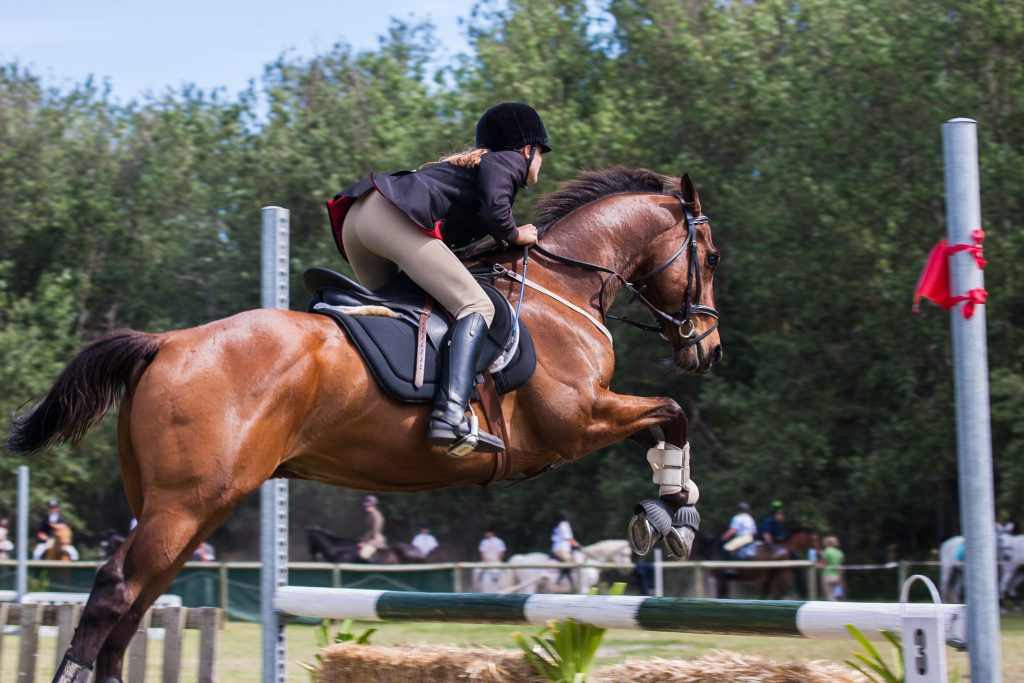
    Jumping

    Jumping combines athleticism, confidence, and teamwork.

    Riders learn to guide their horses over fences while maintaining balance and rhythm.

    Jumping is exciting but usually comes after developing solid riding fundamentals.


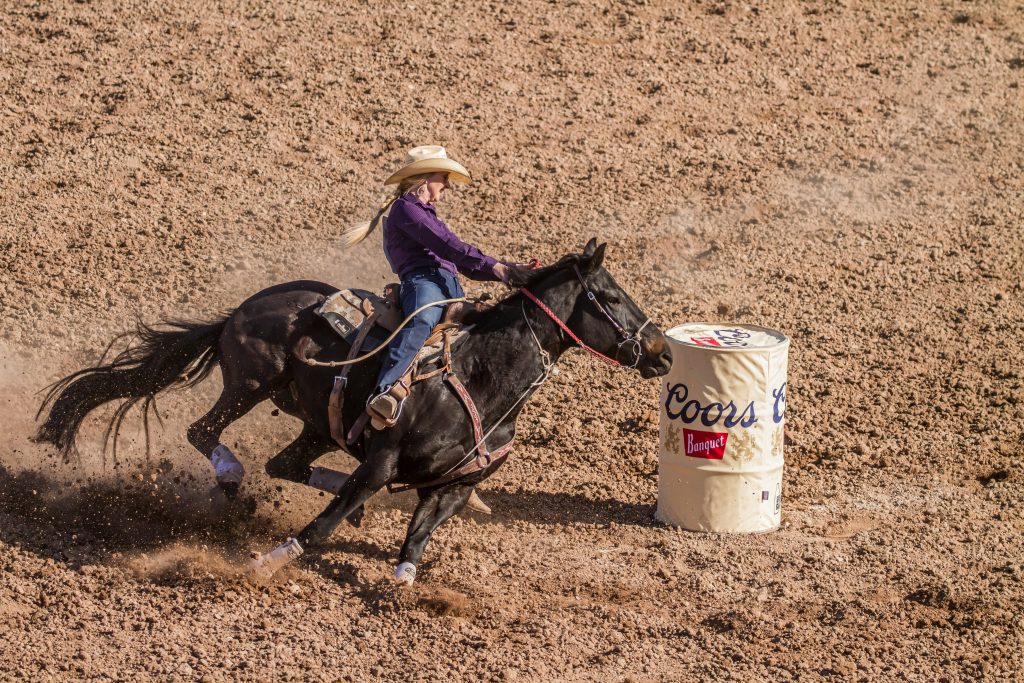
    Photo credit: Dulcey Lima

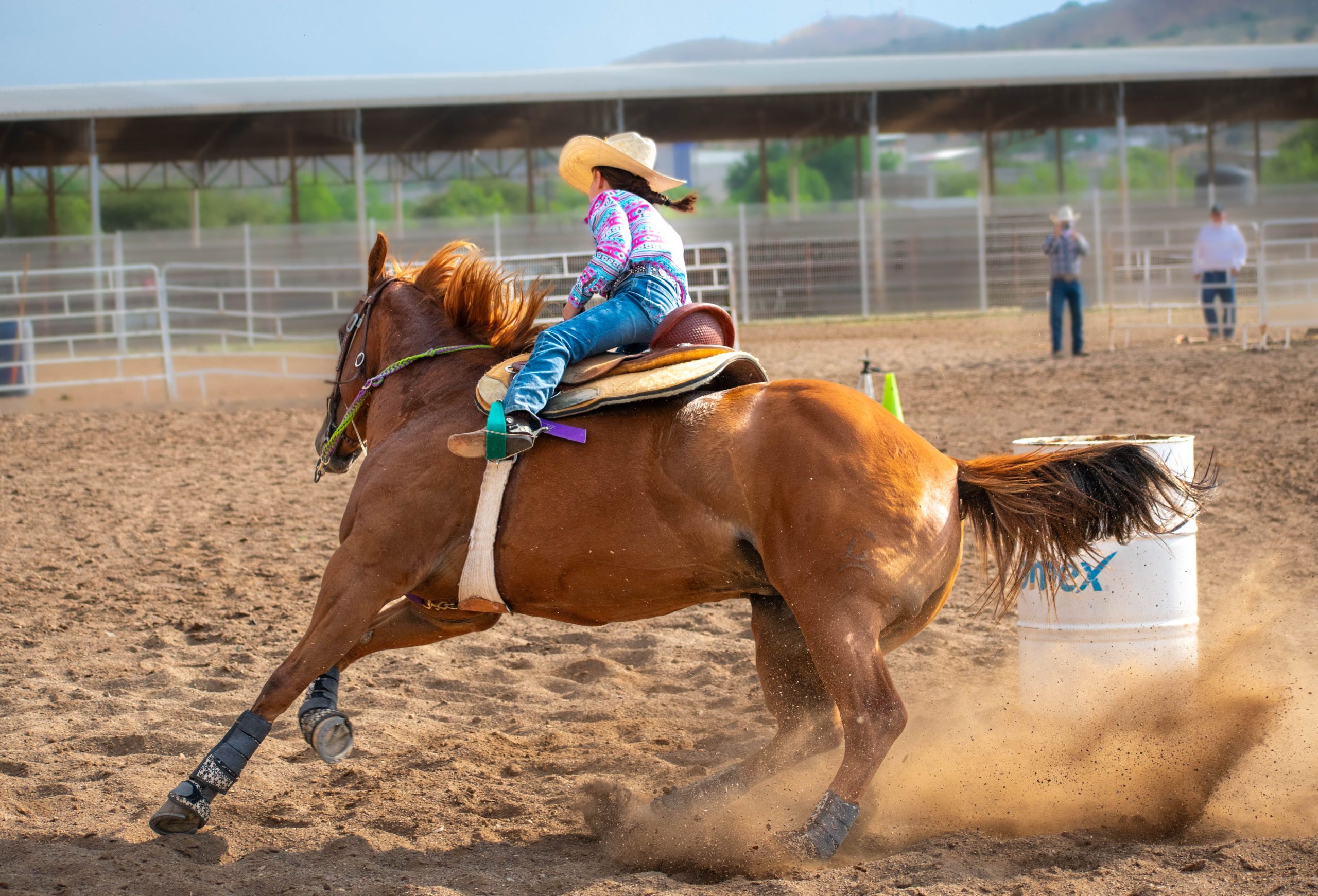
    Barrel Racing

    If speed and competition excite you, barrel racing may catch your interest.

    Riders navigate a cloverleaf pattern around barrels while racing against the clock.

    It requires:

    • Fast reflexes
    • Strong communication
    • A confident horse-and-rider partnership

    Ranch Riding

    Ranch riding showcases practical horsemanship and the skills traditionally used while working cattle.

    Many riders enjoy ranch riding because it emphasizes versatility, smooth movement, and a willing partnership with the horse.


    Do You Have to Choose Just One?

    Absolutely not.

    Many riders explore multiple disciplines throughout their lives.

    You might begin with English lessons before discovering trail riding.

    You might learn Western riding and later develop an interest in dressage.

    Every discipline teaches valuable horsemanship skills that can improve your riding regardless of where your journey leads.


    Questions to Help You Decide

    Ask yourself these questions:

    • Do I want to compete or ride recreationally?
    • Am I more interested in speed or precision?
    • Would I rather spend time on trails or in an arena?
    • What riding styles are available near me?
    • Which discipline simply sounds the most enjoyable?

    Sometimes the best decision is the one you’re most excited to try.


    🐴 Which Horse Riding Discipline Fits You?

    Not sure whether English or Western riding is right for you? Answer the questions below and see which discipline best matches your interests. There are no right or wrong answers—this is simply a fun way to explore where your riding journey might begin.


    1. What sounds like your perfect day with a horse?

    A. Jumping fences and improving my riding skills in an arena.

    B. Exploring scenic trails and enjoying nature.

    C. Working cattle or learning ranch skills.

    D. Competing in fast-paced events like barrel racing.


    2. What type of challenge motivates you most?

    A. Precision, technique, and continuous improvement.

    B. Relaxing adventures and building a partnership with my horse.

    C. Practical horsemanship and real-world riding skills.

    D. Speed, excitement, and competition.


    3. Which horse-related videos do you watch first?

    A. Dressage or show jumping.

    B. Trail riding through beautiful landscapes.

    C. Ranch riding or cattle work.

    D. Barrel racing or rodeo events.


    4. Which riding environment sounds the most enjoyable?

    A. A riding arena with lessons and structured training.

    B. Forest trails, mountains, or open countryside.

    C. Ranches and open fields.

    D. Rodeo arenas and competitions.


    5. What’s your biggest goal?

    A. Becoming a skilled rider through structured training.

    B. Enjoying horses as a relaxing hobby.

    C. Learning practical horsemanship and working with horses.

    D. Competing and improving my speed and athletic ability.


    6. Which riding style appeals to you most?

    A. English

    B. Western

    C. I’m not sure yet.

    D. I’d love to try both.


    Your Results

    Mostly A’s — English Riding

    You may enjoy English riding if you’re interested in developing technical riding skills, improving your balance, and possibly exploring disciplines such as dressage, jumping, hunter, or eventing. English riding offers a rewarding path for riders who enjoy precision, continuous learning, and athletic challenges.


    🟫 Mostly B’s — Trail Riding

    You enjoy adventure, beautiful scenery, and spending quality time with your horse. Trail riding can be enjoyed using either English or Western tack, so don’t feel limited to one discipline. If your


    Beginner Essentials for Every Discipline

    No matter which discipline you choose, you’ll need:

    • A certified riding helmet
    • Riding boots with a defined heel
    • Comfortable riding clothes
    • A positive attitude
    • Patience
    • A willingness to learn

    Good horsemanship matters far more than the type of saddle you ride.


    Frequently Asked Questions

    Is one discipline better for beginners?

    No.

    A knowledgeable instructor, a safe horse, and regular practice are much more important than the discipline itself.


    Can I switch disciplines later?

    Absolutely.

    Many riders enjoy both English and Western riding or transition into different disciplines as their interests evolve.


    Do I need expensive equipment right away?

    No.

    Most beginners can start with basic riding gear and purchase specialized equipment after deciding which discipline they enjoy most.


    Should children and adults choose different disciplines?

    Not necessarily.

    The best discipline is the one that matches the rider’s interests, goals, and available instruction.


    Final Thoughts

    The best horse riding discipline is the one that keeps you excited to learn, eager to spend time with horses, and motivated to continue improving.

    Whether you choose English, Western, trail riding, dressage, jumping, ranch riding, or another discipline entirely, remember that every accomplished rider started exactly where you are now—with curiosity and a willingness to learn.

    Don’t be afraid to try something new. Take lessons, ask questions, and enjoy the journey.

    At Heels Down Co, we believe every discipline has something valuable to offer. No matter where your riding adventure begins, we hope it leads to a lifetime of memorable experiences with horses.

    Happy riding!


    ❤️ Heels Down Co Recommendation

    If you’re unsure where to start, book one English lesson and one Western lesson at a local riding facility. Experiencing both styles firsthand is often the easiest way to discover which one feels like home in the saddle.

  • English vs. Western Riding: Which Is Right for You?

    English vs. Western Riding: Which Is Right for You?

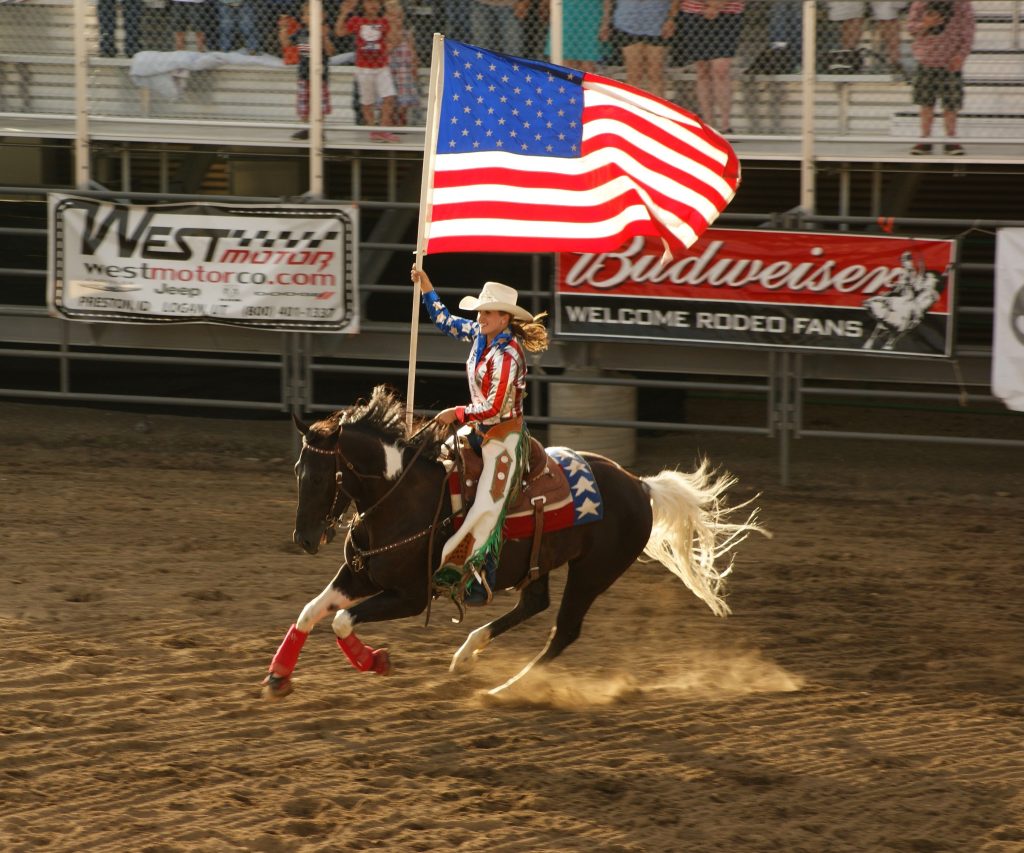
    Photo credits: Caitlin Ralston, Live Kaiah

    If you’re interested in horseback riding, one of the first questions you’ll likely hear is, “Do you want to ride English or Western?”

    For many beginners, that question can feel overwhelming. You may have seen riders jumping fences in fitted jackets or cowboys and cowgirls working cattle from horseback, but what are the real differences? More importantly, which style is right for you?

    The truth is, there isn’t a “better” discipline. English and Western riding both teach excellent horsemanship, balance, communication, and respect for the horse. The best choice comes down to your personal interests, riding goals, and the type of experience you’re looking for.

    In this guide, we’ll explore the similarities and differences between English and Western riding to help you decide which path is the best fit—or maybe inspire you to try both.


    What Do English and Western Riding Have in Common?

    Before looking at the differences, it’s important to recognize what both disciplines share.

    Whether you ride English or Western, you’ll learn how to:

    • Build trust with your horse.
    • Develop balance and coordination.
    • Use proper riding aids.
    • Groom and care for your horse.
    • Ride safely and confidently.
    • Continue improving your horsemanship throughout your life.

    At their core, both disciplines are built on creating a partnership between horse and rider.


    English vs. Western Riding: Side-by-Side Comparison

    FeatureEnglish RidingWestern Riding
    Primary FocusPrecision, balance, communication, and athletic performanceComfort, versatility, practical horsemanship, and long hours in the saddle
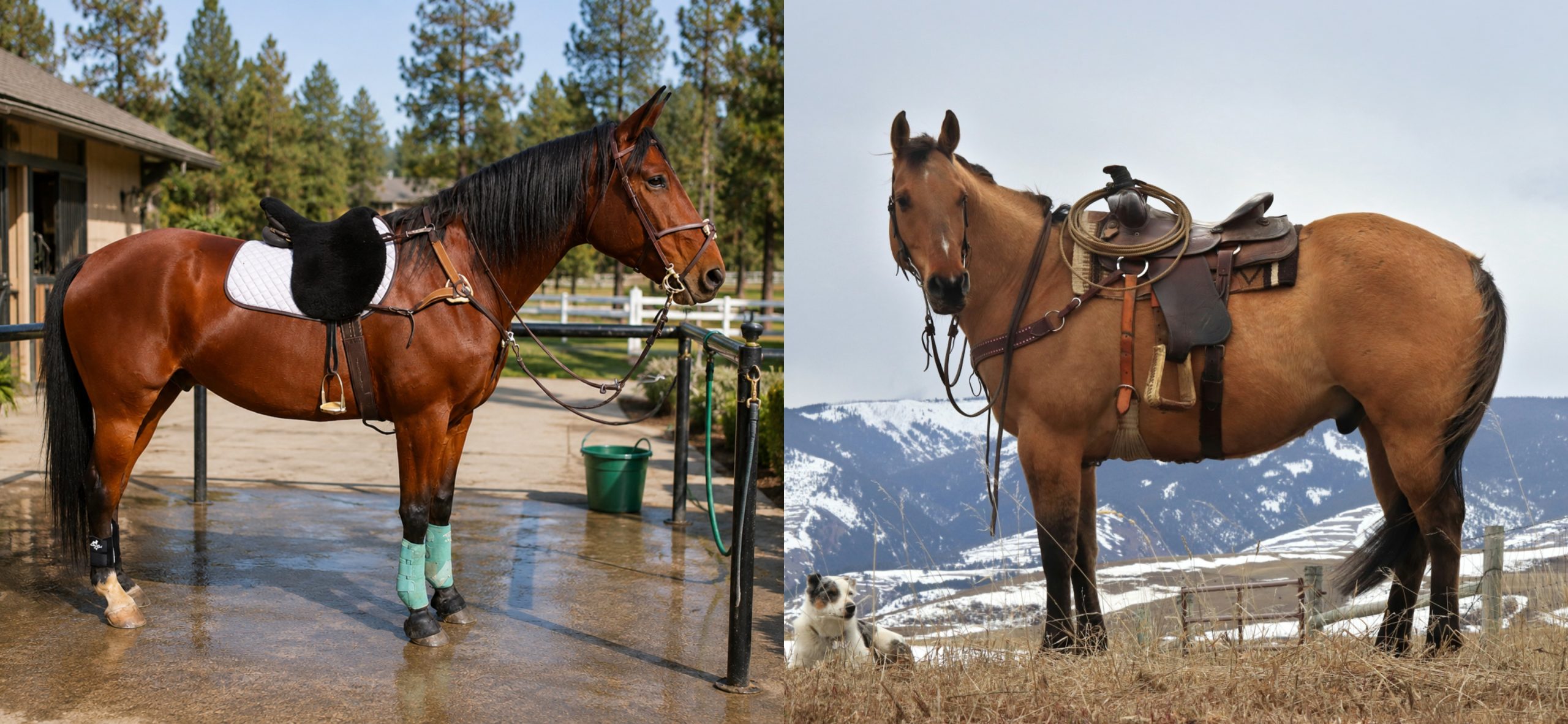
    SaddleLightweight saddle designed for close contact with the horseLarger, heavier saddle designed for stability and comfort
    Riding StyleMore upright position with closer communication through the seat and legsRelaxed seat with longer stirrups and a deeper saddle
    Common DisciplinesDressage, Hunter, Jumper, Eventing, Hunt Seat, Saddle SeatTrail Riding, Ranch Riding, Reining, Barrel Racing, Cutting, Western Pleasure
    Typical ClothingBreeches or riding tights, polo or riding shirt, paddock or tall bootsRiding jeans, long-sleeve shirt, Western boots, belt
    BootsPaddock boots, tall field boots, or dress boots with a defined heelWestern riding boots with a defined riding heel
    HelmetCertified riding helmet (standard for all riders)Certified riding helmet strongly recommended for riders of all ages and experience levels
    Horse Breeds Commonly SeenThoroughbreds, Warmbloods, Arabians, Morgans, and many other breedsQuarter Horses, Paint Horses, Appaloosas, Morgans, and many other breeds
    Ideal ForRiders interested in jumping, dressage, precision, and structured trainingRiders interested in trail riding, ranch work, versatility, or Western sports
    Competition OpportunitiesHorse shows, dressage, jumping, hunter, and eventing competitionsRodeos, barrel racing, reining, ranch riding, cutting, and Western pleasure shows
    Beginner Friendly?✅ Yes, with a good instructor and a suitable horse✅ Yes, with a good instructor and a suitable horse
    Overall GoalDevelop precision, balance, and refined communication with the horseDevelop a relaxed, responsive partnership suitable for work, recreation, or competition

    💡 Heels Down Co Tip

    The “best” discipline isn’t the one someone else recommends—it’s the one that keeps you excited to learn, spend time with horses, and continue improving. If you’re unsure, try one English lesson and one Western lesson before investing in discipline-specific gear.


    Photo credit: Jean van der Meulen

    What Is English Riding?

    English riding has deep roots in European horsemanship and is popular around the world.

    It emphasizes communication, balance, precision, and athletic performance.

    English riders typically use a lighter saddle that allows closer contact with the horse, making it easier to feel subtle movements and cues.

    Popular English disciplines include:

    • Hunter
    • Jumper
    • Dressage
    • Eventing
    • Hunt Seat
    • Saddle Seat
    • English Pleasure

    Many riders enjoy English riding because it focuses on precision, technique, and continuous skill development.


    English Riding May Be Right for You If…

    • You enjoy learning technical riding skills.
    • You’re interested in jumping or dressage.
    • You like a close connection with your horse.
    • You enjoy competitions that emphasize precision.
    • You appreciate a traditional equestrian style.

    Photo credit: Ted McDonnell

    What Is Western Riding?

    Western riding developed from the practical needs of ranch work throughout North America.

    Western saddles are generally larger and designed to provide comfort during long hours in the saddle.

    Today’s Western riding includes many different activities, such as:

    • Trail Riding
    • Ranch Riding
    • Reining
    • Barrel Racing
    • Pole Bending
    • Cutting
    • Team Penning
    • Western Pleasure

    Western riding often emphasizes smooth communication, relaxed movement, and practical horsemanship.


    Western Riding May Be Right for You If…

    • You enjoy trail riding.
    • You’re interested in ranch work or Western sports.
    • You like a relaxed riding style.
    • You plan to spend long hours in the saddle.
    • You appreciate Western traditions and culture.

    Equipment Differences

    Although the fundamentals of riding remain the same, the equipment looks different.

    English Equipment

    • Lightweight English saddle
    • Shorter stirrups
    • English bridle
    • Breeches or riding tights
    • Tall boots or paddock boots
    • Riding helmet

    Western Equipment

    • Western saddle
    • Larger stirrups
    • Western bridle
    • Riding jeans
    • Western riding boots
    • Riding helmet (recommended for riders of all ages and experience levels)

    While the equipment differs, safety and proper fit are important in both disciplines.


    Which Discipline Is Easier for Beginners?

    This is one of the most common questions new riders ask.

    The answer?

    Neither discipline is inherently easier.

    A great instructor, a well-trained horse, and consistent practice matter far more than whether you begin in English or Western riding.

    Many riders even switch disciplines later or enjoy both throughout their riding journey.


    Can You Ride Both?

    Absolutely!

    Many horse enthusiasts enjoy both English and Western riding.

    Learning multiple disciplines can improve your balance, adaptability, and understanding of horses.

    Trying both styles also helps you discover what you enjoy most without feeling locked into one path.


    Choosing the Right Discipline

    Ask yourself a few simple questions.

    Do you dream of…

    • Jumping over fences?
    • Competing in dressage?
    • Trail riding through beautiful scenery?
    • Working cattle?
    • Barrel racing?
    • Riding recreationally with friends?

    Your answers may naturally point you toward one discipline, but remember that there’s no rule saying you can’t explore both.

    The most important thing is finding a style that keeps you excited to ride.


    Beginner Essentials for Every Rider

    No matter which discipline you choose, you’ll need:

    • A certified riding helmet
    • Riding boots with a defined heel
    • Comfortable riding clothes
    • Gloves (optional)
    • A willingness to learn
    • Patience and consistency

    Good horsemanship matters more than the type of saddle you ride in.


    Frequently Asked Questions

    Can I switch from English to Western riding later?

    Yes! Many riders successfully transition between disciplines. The fundamentals of balance, communication, and horse care apply to both.


    Do English and Western riders use different horses?

    Some breeds are more common in one discipline than another, but many horses can excel in multiple disciplines depending on their training and abilities.


    Is one discipline safer?

    Both English and Western riding are safe when proper instruction, suitable equipment, and certified riding helmets are used.


    Which discipline costs less?

    Costs vary depending on your location, riding goals, and equipment. Beginner lessons are often similarly priced, while specialized equipment and competition expenses can differ.


    Final Thoughts

    Choosing between English and Western riding isn’t about picking the “right” answer—it’s about discovering what inspires you to spend more time with horses.

    Some riders love the precision and athleticism of English riding. Others enjoy the comfort, versatility, and traditions of Western riding. Many discover that they appreciate both for different reasons.

    Whichever path you choose, remember that the heart of horsemanship remains the same. Respect your horse, continue learning, prioritize safety, and enjoy every ride.

    At Heels Down Co, we celebrate every rider, every discipline, and every journey. Whether you’re riding through an arena, exploring mountain trails, or competing in the show ring, we hope you’ll continue learning, growing, and creating unforgettable memories with your horse.

    Happy riding!


    ❤️ Heels Down Co Recommendation

    If you’re still undecided, consider scheduling one English lesson and one Western lesson before investing in discipline-specific equipment. Experiencing both firsthand is often the best way to discover which style feels most natural and enjoyable.

  • Horse Grooming Kit Checklist: Everything You Need for a Happy, Healthy Horse

    Horse Grooming Kit Checklist: Everything You Need for a Happy, Healthy Horse

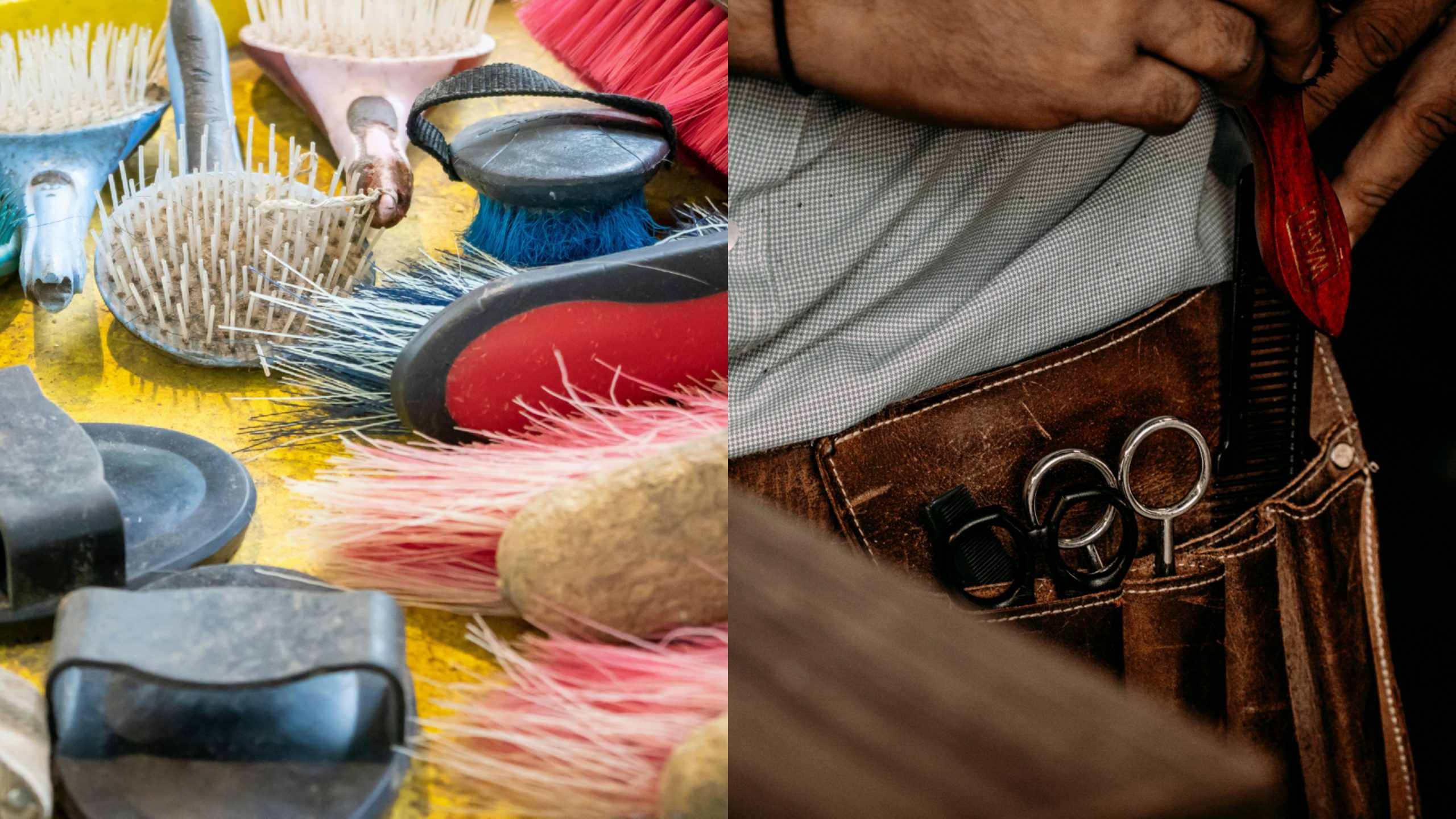
    Photo credit: Winston Chen, Amr Taha™

    Whether you’re preparing for your very first riding lesson, bringing home your first horse, or simply wondering what belongs in a grooming kit, you’ve come to the right place.

    Standing in the tack store can be overwhelming. There are brushes of every shape and size, countless grooming products, and plenty of accessories that claim to be “must-haves.” The truth is, you don’t need every item on the shelf to keep your horse looking and feeling their best.

    A well-stocked grooming kit helps keep your horse healthy, comfortable, and ready to ride. More importantly, grooming is about much more than making your horse look good. It’s an opportunity to build trust, check for injuries, improve circulation, and spend quality time together.

    Whether you ride English, Western, trail, or simply enjoy caring for horses, this guide covers the essential grooming tools every horse owner and rider should have.


    Why Grooming Matters

    Grooming is one of the most important parts of horse care.

    Regular grooming helps:

    • Remove dirt, mud, and loose hair.
    • Improve blood circulation.
    • Reduce the risk of skin irritation.
    • Check for cuts, swelling, or injuries.
    • Clean the hooves before riding.
    • Strengthen the bond between you and your horse.

    A clean horse is often a healthier, happier horse—and grooming gives you the chance to notice small problems before they become bigger ones.


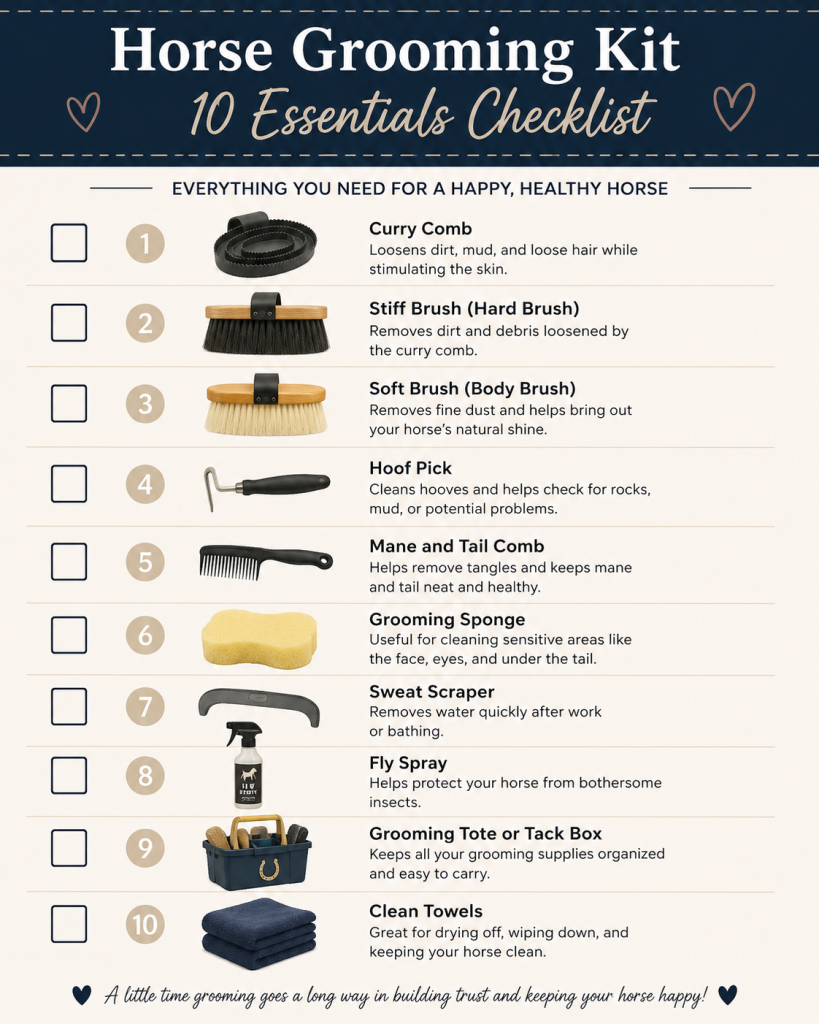
    Your Essential Horse Grooming Kit

    1. Curry Comb

    The curry comb is usually the first tool you’ll use.

    Using small circular motions, it loosens dirt, dried mud, loose hair, and debris while stimulating the skin and improving circulation.

    Rubber curry combs are gentle enough for most horses, while plastic versions work well for stubborn mud.

    Tip: Avoid using a curry comb directly on your horse’s face or lower legs.


    2. Stiff Brush (Hard Brush)

    After using the curry comb, the stiff brush removes the loosened dirt from your horse’s coat.

    It’s especially useful during muddy seasons or when your horse has been rolling in the pasture.

    Use firm, flicking motions that brush dirt away from the horse’s body.


    3. Soft Brush (Body Brush)

    The soft brush removes finer dust while smoothing the coat and bringing out your horse’s natural shine.

    This brush is gentle enough for sensitive areas and is perfect for finishing the grooming process.

    Many riders use the soft brush on the face, neck, shoulders, and other delicate areas.


    4. Hoof Pick

    A hoof pick is one of the most important tools in your grooming kit.

    Cleaning your horse’s hooves before and after every ride helps remove rocks, mud, packed dirt, and manure that can lead to discomfort or hoof problems.

    As you clean each hoof, look for:

    • Loose horseshoes
    • Cracks
    • Foul odors
    • Signs of thrush
    • Embedded stones

    Healthy hooves are essential for a healthy horse.


    5. Mane and Tail Comb

    A quality mane and tail comb helps remove tangles while keeping your horse looking neat.

    Work slowly from the bottom upward to reduce pulling and prevent unnecessary hair breakage.

    Many riders also use a detangling spray to make grooming easier.


    6. Grooming Sponge

    A clean sponge has several uses around the barn.

    Many riders keep two separate sponges:

    • One for cleaning around the horse’s eyes and nose.
    • One for cleaning underneath the tail and other areas.

    Keeping separate sponges helps maintain good hygiene.


    7. Sweat Scraper

    During hot weather or after bathing your horse, a sweat scraper helps remove excess water quickly.

    Removing water allows your horse to dry faster and can help keep them more comfortable during warm months.


    8. Fly Spray

    Nothing can make a horse more uncomfortable than biting flies.

    A quality fly spray helps reduce irritation while making rides more enjoyable for both horse and rider.

    Always follow the manufacturer’s directions and avoid spraying directly into your horse’s eyes or face.


    9. Grooming Tote or Tack Box

    Keeping your supplies organized saves time and makes trips to the barn much easier.

    A grooming tote is perfect for storing:

    • Brushes
    • Hoof pick
    • Fly spray
    • Mane comb
    • Sponge
    • Towels
    • Gloves

    Choose a sturdy tote that’s easy to carry and simple to clean.


    10. Clean Towels

    Soft towels are surprisingly useful around the barn.

    Use them for:

    • Drying your horse after bathing
    • Wiping dusty coats
    • Cleaning tack
    • Drying legs after washing

    Having a few extra towels on hand is always a good idea.


    Helpful Extras

    As you gain experience, you may choose to add:

    • Mane and tail detangler
    • Hoof conditioner
    • Coat conditioner
    • Shedding blade
    • Face brush
    • Clippers
    • Cooling towels
    • Liniment products (when appropriate)

    These items aren’t essential for beginners but can make grooming easier depending on your horse’s needs.


    Common Grooming Mistakes Beginners Make

    Even experienced riders continue learning better grooming techniques.

    Try to avoid these common mistakes:

    • Forgetting to pick out the hooves.
    • Brushing over cuts or sore areas without checking them.
    • Using dirty brushes.
    • Pulling aggressively on tangled manes or tails.
    • Rushing through grooming before riding.

    Take your time. Grooming is one of the best opportunities to connect with your horse while checking their overall health.


    Our Favorite Beginner Grooming Essentials

    (Add your affiliate recommendations here.)

    Best Beginner Grooming Kit

    Ideal for new horse owners looking for an all-in-one starter set.

    Best Curry Comb

    Comfortable to hold and effective at loosening dirt and shedding hair.

    Best Hoof Pick

    Durable, easy to grip, and gentle to use.

    Best Grooming Tote

    Keeps your grooming supplies organized whether you’re at home or traveling.


    Frequently Asked Questions

    How often should I groom my horse?

    Most horses benefit from grooming before every ride and again afterward if they’ve become sweaty or dirty. Even on days you don’t ride, regular grooming helps you monitor your horse’s health and strengthen your bond.


    Do I need expensive grooming tools?

    Not at all.

    Many affordable grooming kits include everything a beginner needs. As you gain experience, you can upgrade individual tools based on your horse’s needs.


    Should I groom my horse before or after riding?

    Ideally, both.

    Before riding, grooming removes dirt that could cause rubbing under the saddle or tack. After riding, a quick grooming helps remove sweat, dust, and loose hair while giving you another chance to check your horse for any signs of discomfort.


    Can English and Western riders use the same grooming equipment?

    Absolutely.

    Regardless of riding discipline, every horse benefits from proper grooming. The tools and techniques are largely the same whether you ride English, Western, trail, or recreationally.


    Final Thoughts

    A good grooming kit isn’t about owning the most expensive brushes or every product on the market. It’s about having the right tools to care for your horse safely, comfortably, and consistently.

    Regular grooming improves your horse’s health, helps you catch potential issues early, and creates valuable time together that strengthens your partnership.

    Whether you’re brushing away dust after a trail ride, preparing for a lesson, or getting ready for a competition, every grooming session is another opportunity to care for the horse that gives you so much in return.

    At Heels Down Co, we believe that great horsemanship starts with the little things—and grooming is one of the best places to begin.

    Happy grooming!