
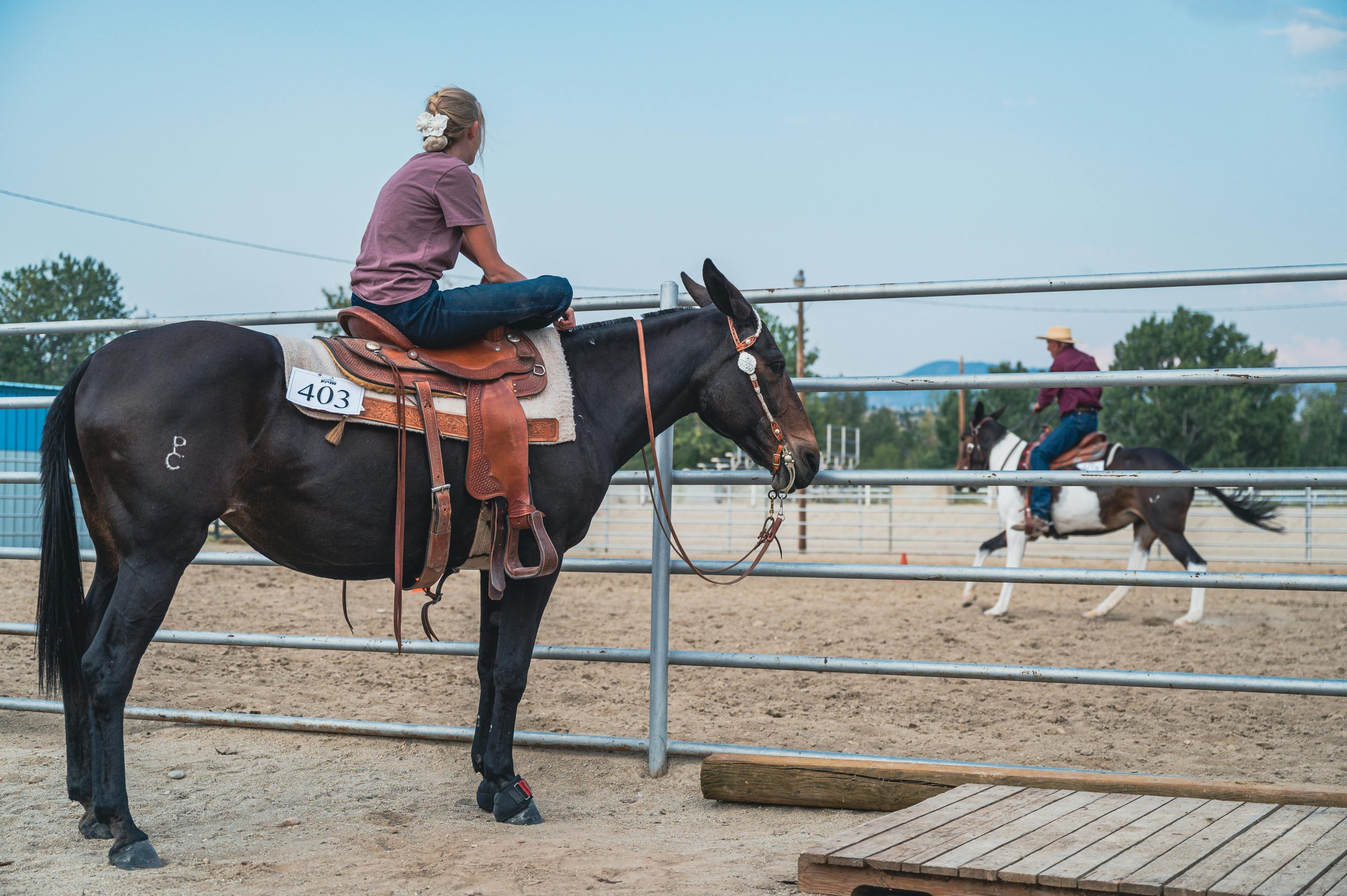
Photo Credit: Brett Sayles
How becoming a steadier rider can change the way you ride
Sometimes a ride feels harder than it should.
Your horse may feel tense. You may feel like you’re using too much rein, giving too many corrections, or constantly trying to fix something. You may finish the ride wondering why everything felt so difficult when you know you and your horse are capable of more.
Before assuming your horse is the problem, take a moment to look at what’s happening in your own body and mind.
Horses are incredibly aware of the people riding and handling them. Small changes in our breathing, posture, hands, balance, and intention can influence the way we communicate.
That doesn’t mean every difficult ride is caused by the rider. Horses have their own personalities, physical needs, experiences, and bad days too.
But becoming more aware of our own tension can give us another place to start.
Here are five common mistakes that can create unnecessary tension in the saddle—and what you can do instead.
1. Holding Your Breath
It sounds simple, but many riders hold their breath without realizing they’re doing it.
Maybe you’re approaching something that makes you nervous. Maybe you’re concentrating hard on getting an exercise right. Or perhaps your horse suddenly becomes tense and your instinct is to brace.
Whatever the reason, holding your breath can cause the rest of your body to tighten.
Your shoulders may rise. Your hands may become less flexible. Your seat can become less relaxed, and your entire body can start communicating tension rather than softness.
Try this instead
Make breathing part of your riding awareness.
Before you begin an exercise or approach something that makes you nervous, take a deliberate breath and allow yourself to exhale.
Pay attention to:
- Your shoulders
- Your jaw
- Your hands
- Your legs
- Your seat
Ask yourself:
“Am I breathing?”
Sometimes that one question is enough to bring your attention back to your body.
You don’t need to force yourself to be perfectly relaxed. Instead, look for small opportunities to soften.
2. Riding Ahead of the Moment
Anticipation can create tension before anything has actually happened.
You see the jump coming and start worrying about it.
You expect your horse to spook.
You know you’re approaching the part of the arena where things usually go wrong.
Or you begin thinking three steps ahead instead of paying attention to the step you’re actually riding.
When your mind gets ahead of the moment, your body can follow.
You may shorten the reins, grip with your legs, lean forward or back, or begin making corrections before your horse has actually done anything wrong.
Try this instead
Stay present.
Instead of thinking:
“What’s going to happen?”
Bring your attention back to:
“What is happening right now?”
Focus on the rhythm of the horse’s movement. Feel your position. Notice your breathing. Think about where you’re going and what you’re asking for in the current moment.
You can prepare without becoming tense.
Preparation gives you a plan.
Anticipation often creates a problem before there is one.
3. Overcorrecting
When something doesn’t go the way we expected, it’s tempting to immediately do more.
More rein.
More leg.
More pressure.
Another correction.
And then another.
The problem is that more input doesn’t necessarily create a clearer message.
Sometimes it creates confusion.
Imagine someone giving you several different instructions at the same time. Even if every individual instruction makes sense, it can become difficult to figure out exactly what they’re asking you to do.
The same principle applies to riding.
Try this instead
Give your horse a clear request and then allow time for a response.
If the response isn’t what you wanted, assess what happened before immediately adding more pressure.
Ask yourself:
- Did I give a clear cue?
- Did I give my horse enough time to respond?
- Was my position supporting what I was asking?
- Did I accidentally give conflicting signals?
- Do I actually need another correction?
Sometimes the best correction is less.
Clear communication isn’t about constantly doing something. It’s about making your requests understandable.
4. Tight Hands
Your hands have a direct role in how you communicate with your horse, which makes them an easy place for tension to show up.
When you’re nervous or frustrated, it can be tempting to hold tighter.
You may shorten the reins because you want more control.
You may tighten your fingers when your horse speeds up.
You may not even realize how much tension you’re carrying through your arms.
But tension in your hands can travel through your arms and shoulders and affect the rest of your position.
Try this instead
Become aware of what your hands are doing.
Ask yourself:
“Am I holding the reins, or am I gripping them?”
Your goal isn’t to have completely passive hands. Good riding requires communication.
Instead, think about maintaining a consistent, intentional connection without unnecessarily tightening.
Keep checking your:
- Fingers
- Wrists
- Forearms
- Elbows
- Shoulders
If you notice yourself getting tense, take a breath and consciously soften where you can.
The goal isn’t to throw away the reins.
It’s to communicate without unnecessary tension.
5. Riding Without Intention
One of the easiest ways to become reactive is to get on your horse without knowing what you want from the ride.
That doesn’t mean every ride needs to have a complicated training plan.
Sometimes the goal really is just to enjoy your horse.
But having some intention can help you stay focused rather than reacting to whatever happens next.
Without direction, you may spend the ride responding to problems as they appear.
Your horse speeds up—you react.
Your horse drifts—you react.
You lose your position—you react.
Something doesn’t go perfectly—you react.
Try this instead
Before you ride, choose one simple intention.
It could be:
- Keep my breathing steady.
- Focus on my position.
- Ride with softer hands.
- Stay present.
- Improve my transitions.
- Be patient.
- Ride forward with confidence.
- Enjoy my horse.
It doesn’t have to be complicated.
In fact, one clear intention is often enough.
Having something specific to focus on gives your mind somewhere productive to go.
What If You’re Already Tense?
Recognizing tension doesn’t mean you have to fix everything in one ride.
Sometimes the best thing you can do is simply notice it.
You might realize:
“My shoulders are tight.”
Or:
“I’ve been holding my breath.”
Or:
“I’ve been anticipating everything my horse does.”
That awareness is progress.
You can then make one small adjustment.
Take a breath.
Relax your shoulders.
Soften your hands.
Sit deeper.
Look where you’re going.
Give your horse a moment to respond.
Then continue.
You don’t need to make every ride perfect.
The Rider-Horse Connection
Riding is a conversation between horse and rider.
Your horse communicates through movement, body language, expression, rhythm, and behavior. You communicate through your position, aids, balance, energy, and intention.
The better you become at noticing your own communication, the easier it can become to recognize what you’re communicating to your horse.
That doesn’t mean you should blame yourself whenever a ride doesn’t go well.
It means you have something you can work on.
And that’s one of the best parts of riding.
There is always something to learn.
A Simple Reset Before Your Next Ride
Before you mount, take a moment.
Don’t rush straight into the ride.
Stand beside your horse and take a breath.
Then ask yourself:
How does my body feel?
Are your shoulders tense?
Is your jaw tight?
Are you holding your breath?
Are your hands already gripping?
Then ask:
What is one thing I want to focus on today?
Choose one thing.
That’s enough.
Once you’re riding, return to that intention whenever you notice yourself becoming tense or distracted.
You don’t have to fix everything.
Just come back to the present moment.
Final Thought
A steady rider isn’t necessarily a rider who never gets nervous, makes mistakes, or has a difficult ride.
A steady rider is someone who can notice what’s happening and make a thoughtful choice about what to do next.
Sometimes that means asking for something differently.
Sometimes it means giving your horse more time.
Sometimes it means correcting your own position.
And sometimes it means taking a breath and starting again.
Calm doesn’t mean passive.
It means intentional.
The next time a ride feels tense, before immediately asking, “What’s wrong with my horse?”, take a moment to ask:
“What am I bringing into this ride?”
That simple question might give you a different place to begin.
Heels Down. Mind Calm. Ride Steady.
Keep Exploring Heels Down Co.
Looking for more ways to become a more thoughtful, confident rider?
Explore the Journal for practical riding advice, horse care information, gear guides, and inspiration for life in and around the barn.
Leave a Reply